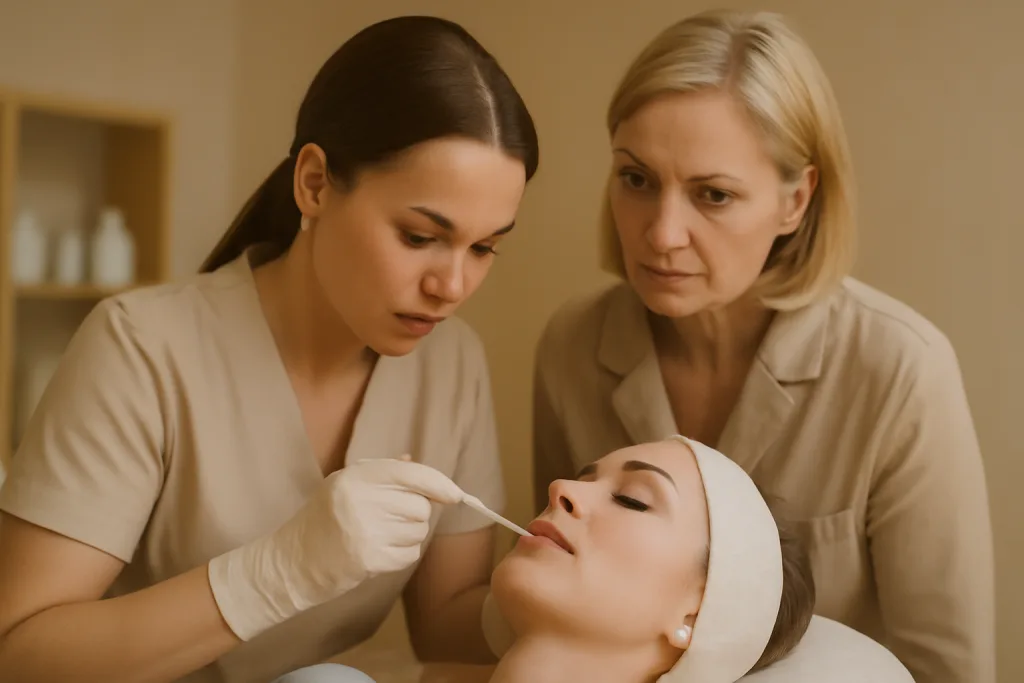
Introduction
Orenburg’s beauty market is growing: demand for professional cosmetologists — from facial estheticians to advanced skin therapists — is rising alongside consumer awareness. This guide focuses on what cosmetologists in Orenburg need to know: where to begin with education, which techniques and procedures require special training, how to handle legal and sanitary requirements, and how to build a local brand that attracts and retains clients.
1. Education & certification — getting started
— Seek accredited training:
— Vocational programs (парикмахерское/косметическое училище), courses at local colleges and private training centers teach facials, skin care, waxing, lash & brow techniques.
— Medical cosmetology (injectables, laser, mesotherapy) generally requires a medical diploma and additional certified training — verify scope with the regional Ministry of Health.
— Verify accreditation and certificates:
— Ask for accreditation documents and sample certificates.
— Prefer programs that provide practical hours, live-model practice and clear topics list.
— Where to check locally:
— Rospotrebnadzor (Роспотребнадзор) Orenburg — sanitary requirements for training premises.
— Orenburg regional Ministry of Health (Министерство здравоохранения Оренбургской области) — rules for medical procedures.
— Local colleges, medical university and training centers for schedules and admission.
2. Core techniques & procedures to master
— Basic (entry-level): skin analysis, facial cleansing, manual cosmetology, basic peels (superficial), waxing, eyebrow shaping/staining, lash extensions and laminations, makeup.
— Intermediate: deeper chemical peels (with certified training), advanced facial devices (ultrasound, microcurrent), microdermabrasion, body treatments.
— Advanced/medical (require medical credentials or physician supervision): injectables (botulinum toxin, fillers), mesotherapy, laser hair removal, IPL, radiofrequency, microneedling with PRP.
— Important: always follow manufacturer training for devices and keep supplier certificates.
3. Sanitary, regulatory and legal essentials
— Hygiene & infection control:
— Comply with SanPiN and local Rospotrebnadzor standards: sterilization/autoclave protocols, single-use items, surface disinfection, PPE, proper waste disposal (medical sharp waste).
— Licensing & scope:
— Non-invasive aesthetic services typically require professional certificates but not a medical license.
— Invasive procedures (injectables, certain laser treatments) usually require a medical qualification and relevant licenses — confirm with the regional health authority.
— Documentation:
— Client intake forms, informed-consent forms (especially for peels, laser, injections), medical history and contraindication logs.
— Maintain procedure records and incident logs.
— Business registration and tax:
— Choose structure: Individual Entrepreneur (ИП) or LLC (ООО). Register with the Federal Tax Service (ФНС) Orenburg.
— Check online cash register (онлайн-касса / ККТ) requirements and choose appropriate tax regime (e.g., simplified tax УСН).
— Consult a local accountant for payroll, VAT and regional specifics.
— Insurance & liability:
— Professional liability insurance is strongly recommended, especially for higher-risk procedures.
— Employment & labor law:
— If hiring staff, follow labor code (Трудовой кодекс), contracts, workplace safety and social contributions.
4. Clinic/salon setup checklist (practical essentials)
— Premises: ventilation, proper lighting, comfortable client area, separate sterilization zone.
— Equipment: certified devices, autoclave, disposable consumables, appropriate chairs/beds.
— Supplies & documentation: consent forms, emergency first-aid kit, fire safety certificate, waste containers (including sharps).
— IT & booking: CRM/booking system, online payment terminals, cash register integrated with OFD.
— Accessibility: clear address on Yandex/2GIS and visible